Source for toyota hilux ac compressor for Revo Fortuner and Hilux
Find 30 listings for for toyota hilux ac compressor compatible with models like Revo and Fortuner. Buyers can compare OEM numbers, refrigerant types, and warranty terms from verified suppliers in Guangdong.
Key considerations
Products List
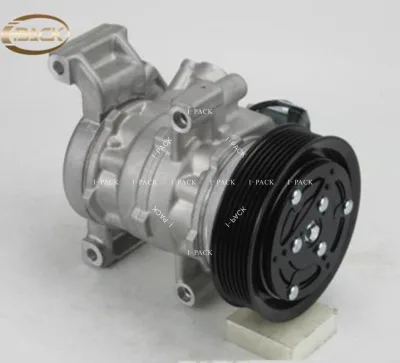


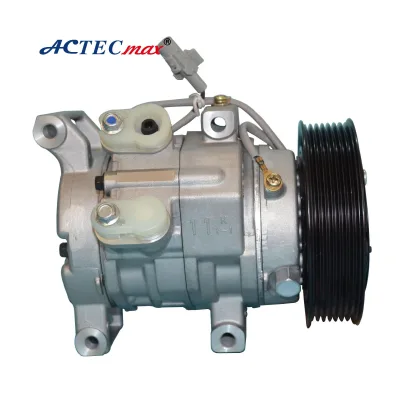


Comprehensive Sourcing Guide
Strategic Sourcing Guide for Toyota Hilux AC Compressors
Understanding Technical Specifications and Compatibility
Acquiring an air conditioning compressor for the Toyota Hilux requires a rigorous examination of technical specifications to ensure seamless integration with the vehicle's existing systems. The market data indicates a strong focus on specific model years, particularly the 2016 Toyota Hilux Revo, which serves as a primary reference point for procurement. Buyers must verify that the product model number aligns precisely with the vehicle's manufacturing year and engine configuration. The observed product listings frequently cite model numbers such as 88320-0K390, 88320-0K530, 88320-0K550, and 88310-0K130. These alphanumeric codes are critical identifiers that distinguish between various compressor variants designed for different engine displacements and cooling requirements.
The physical dimensions and mechanical interface are equally vital. Specifications highlight a pulley diameter of 125mm for certain units, while others list a diameter of 120mm. This variance necessitates a direct measurement of the vehicle's existing pulley or a cross-reference with the vehicle's service manual before placing an order. Furthermore, the groove count is a definitive compatibility factor; the data points to a 7-Pk (7-rib) belt configuration for the relevant units. Mismatching the groove count or pulley diameter can lead to immediate installation failure or premature belt wear.
Electrical and refrigerant specifications must also be strictly adhered to. The standard operating voltage for these compressors is consistently listed as 12V, which is standard for light-duty vehicles. The refrigerant type is identified as R-134a, a standard hydrofluorocarbon refrigerant used in automotive HVAC systems. Buyers should confirm that the compressor's internal design, such as the 10SRE11C type, matches the vehicle's original equipment manufacturer (OEM) design. The product attributes indicate a "Design: OEM Original" classification, suggesting that the unit is intended to replicate the exact performance characteristics of the factory-installed component.
Compliance, Certification, and Quality Verification
When sourcing automotive parts, verifying compliance with industry standards and quality certifications is essential for ensuring long-term reliability. The supplied product information references an "OEM Standard" classification, implying that the manufacturing process aims to meet the original specifications set by the vehicle manufacturer. However, buyers must not assume that "OEM Standard" equates to official OEM certification unless explicitly documented by the supplier. The term "High Performance" and "100% Tested" are observed attributes, but these are self-reported claims that require independent verification through third-party testing reports or supplier-provided quality assurance documentation.
Quality assurance processes should be a primary focus during supplier evaluation. The data mentions that products are "100% Tested," which suggests a functional check prior to packaging. Buyers should request specific details regarding these tests, such as whether they include pressure cycling, leak detection, or electrical continuity checks. The warranty period is listed as 12 months in several listings, which serves as a baseline indicator of the supplier's confidence in their product. However, the terms and conditions of this warranty, including coverage for labor and shipping, must be clearly defined in the purchase agreement.
Regarding certifications, the product origin is consistently noted as Guangdong, China. While this provides insight into the manufacturing hub, it does not inherently guarantee compliance with international safety or environmental standards. Buyers should inquire about specific certifications such as ISO 9001 for quality management or ISO/TS 16949 for automotive quality systems. Additionally, environmental compliance regarding the handling of R-134a refrigerant and the disposal of old units should be verified, especially if the buyer operates in a jurisdiction with strict environmental regulations. The absence of specific certification names in the provided data means that buyers must actively request proof of compliance rather than relying on general product descriptions.
Cost Drivers and Pricing Dynamics
The pricing landscape for Toyota Hilux AC compressors is influenced by a variety of factors, including technical complexity, brand reputation, and supply chain logistics. The observed price range in the market spans from $14 to $228.98 USD. This wide disparity indicates significant variation in product quality, brand tier, and included accessories. Lower-priced units may be generic replacements or refurbished components, while higher-priced items likely represent premium aftermarket brands or units with enhanced durability features.
Several key drivers influence the final cost. The complexity of the compressor design, such as whether it is a reciprocating or rotary vane type, affects manufacturing costs. The data lists "Reciprocating Compressor: Crankshaft And Connecting Rod Type" and "Rotary Compressor: Rotary Vane Type," suggesting that different mechanical architectures command different price points. Additionally, the inclusion of customization options, such as neutral packing or branded packaging, can impact the unit price. The "Customization: Available" attribute implies that buyers may incur additional costs for tailored packaging or specific labeling requirements.
Minimum Order Quantity (MOQ) is another critical cost factor. The observed MOQ range is between 1 and 20 units. Buyers purchasing single items for immediate repair will face a higher per-unit cost compared to those purchasing in bulk. Bulk orders may unlock volume discounts, but the buyer must balance this against inventory holding costs and the risk of obsolescence. The "Selling Units: Single item" attribute suggests that the market accommodates both individual repairs and fleet replenishment, but the pricing structure will differ significantly between these two scenarios. Buyers should also consider the cost of shipping and import duties, which are not included in the listed product prices but can substantially affect the total landed cost.
Typical Applications and Vehicle Compatibility
The primary application for these compressors is the replacement or repair of air conditioning systems in Toyota Hilux vehicles. The product attributes explicitly state the application as "for Toyota Hilux" and "For Toyota Hilux Revo 2016." This specificity is crucial, as the Hilux is a global vehicle platform with numerous variations across different markets and model years. The data also references the Toyota Fortuner, indicating that some compressors may be cross-compatible between these models due to shared platform engineering.
Compatibility extends beyond the vehicle model to the specific engine and transmission configuration. The product specifications mention "Transmission Power: Internal-combustion Engine," confirming that these units are designed for conventional gasoline or diesel engines rather than electric or hybrid powertrains. The "Job Classification: Reciprocating" and "Classification: Variable Capacity" attributes suggest that the compressors are designed to handle varying cooling loads, which is essential for maintaining cabin comfort in diverse climates.
Buyers must be cautious when considering cross-model applications. While the data lists "Application: Toyota Fortuner-Hulix," this should be treated as a potential compatibility indicator rather than a guaranteed fit. The specific OEM numbers, such as 88320-0K520, 88320-0K580, and 88320-0K341, serve as the definitive guide for matching the compressor to the vehicle. Buyers should always cross-reference the vehicle's VIN and existing part number with the supplier's database to ensure a perfect match. The "Purpose: for replace/repair" attribute reinforces that these units are intended for maintenance and restoration rather than initial manufacturing.
Supplier Evaluation and Sourcing Strategy
Evaluating suppliers for automotive components requires a multi-faceted approach that goes beyond price comparison. The origin of the products is consistently listed as Guangdong, China, a major manufacturing hub for automotive parts. While this region offers competitive pricing and a robust supply chain, buyers must conduct thorough due diligence to ensure supplier reliability. Key evaluation criteria should include the supplier's production capacity, quality control processes, and after-sales support.
Buyers should verify the supplier's ability to provide consistent product quality. The "Quality: High Performance" and "Quality: 100% Tested" attributes are positive indicators, but they must be backed by tangible evidence. Requesting samples for inspection before placing a large order is a prudent strategy. Additionally, buyers should assess the supplier's inventory management capabilities to ensure timely delivery. The "Lead time" is not explicitly provided in the data, so buyers must clarify this with the supplier to avoid production delays.
Transparency in communication is another critical factor. Suppliers should be willing to provide detailed product specifications, including the exact OEM numbers and technical drawings. The "Customization: Available" attribute suggests that suppliers may offer flexibility in packaging and labeling, which can be beneficial for private label arrangements. However, buyers should ensure that any customization does not compromise the integrity of the product or its compliance with local regulations.
Quality Control and Long-Term Procurement Considerations
Implementing a robust quality control (QC) protocol is essential for mitigating the risks associated with sourcing automotive parts. Given the wide price range and varying quality claims, buyers should establish clear acceptance criteria before finalizing any purchase. This includes verifying the physical dimensions, such as the pulley diameter and groove count, and testing the electrical and refrigerant specifications. The "Operating Voltage: 12V" and "Refrigerant: R134a" specifications must be confirmed through independent testing if the supplier's claims are not fully trusted.
Long-term procurement considerations involve building a sustainable relationship with reliable suppliers. This includes negotiating favorable terms for warranty claims and establishing a clear process for handling defective units. The "Warranty: 12 Months" attribute provides a baseline for warranty coverage, but buyers should seek to extend this period or negotiate additional protections for high-volume purchases. Additionally, buyers should monitor market trends and technological advancements to ensure that the sourced components remain relevant and compliant with evolving industry standards.
The "Product name: AC Compressor" and "Condition: New" attributes indicate that the market primarily deals in new units. However, buyers should remain vigilant for potential issues such as counterfeit parts or mislabeled specifications. Regular audits of the supply chain and periodic quality checks on incoming stock can help maintain high standards and protect the buyer's reputation. By focusing on technical accuracy, supplier reliability, and rigorous quality control, buyers can secure high-performance AC compressors that meet the demanding requirements of the Toyota Hilux platform.
Comparative Analysis of Compressor Variants
To assist buyers in making informed decisions, the following table summarizes the key technical differences observed in the product data. This comparison highlights the variations in model numbers, OEM references, and physical specifications that are critical for compatibility.
| Feature | Variant A | Variant B | Variant C |
|---|---|---|---|
| Model Number | 88320-0K390 | 88320-0K530 / 0K550 | 88310-0K130 |
| OEM Reference | 88320-0K390 | 88320-0K520 / 0K530 / 0K550 | 88310-0K130 |
| Pulley Diameter | 125mm | 120mm | Not Specified |
| Grooves | 7 Pk | 7 Pk | Not Specified |
| Compressor Type | 10SRE11C | Reciprocating | Reciprocating |
| Application | Hilux Revo 2016 | Hilux | Fortuner / Hilux |
| Refrigerant | R-134a | R-134a | R-134a |
| Voltage | 12V | 12V | 12V |
This table underscores the importance of precise model matching. While the voltage and refrigerant type remain consistent across variants, the pulley diameter and specific model numbers vary significantly. Buyers must use this data to filter options and select the unit that exactly matches their vehicle's requirements. The "Reference" numbers, such as 814709 and 559612, provide additional cross-referencing points for buyers who may have alternative part numbers from different suppliers. By carefully analyzing these specifications, buyers can avoid costly errors and ensure a successful procurement process.
FAQs
What is the operating voltage for these compressors?
The operating voltage is 12V, which is standard for light-duty vehicles. This specification ensures compatibility with the vehicle's electrical system without requiring additional adapters or voltage converters.
Which refrigerant type do these units require?
These compressors require R-134a refrigerant. This is a standard hydrofluorocarbon used in automotive HVAC systems, and buyers must ensure their system is charged with this specific type for proper operation.
Can I find compressors with a 125mm pulley diameter?
Yes, some units are specified with a 125mm pulley diameter. Buyers must verify this dimension against their vehicle's existing pulley to ensure the belt fits correctly and the system operates without slippage.
What is the warranty period for these products?
The warranty period is typically 12 months. This coverage indicates the supplier's confidence in the product, but buyers should verify specific terms regarding labor and shipping costs for claims.
How can I verify the quality of the compressor?
Products are often marked as 100% tested and high performance. Buyers should request detailed test reports to confirm pressure cycling and leak detection were performed before finalizing a purchase.
Which OEM numbers are compatible with the Toyota Hilux?
Compatible OEM numbers include 88320-0K520, 88320-0K580, and 88320-0K390. These alphanumeric codes are critical identifiers that distinguish between variants designed for different engine configurations and model years.
What is the minimum order quantity for single items?
The minimum order quantity can be as low as 1 unit for single items. This allows buyers to purchase a single replacement part without needing to commit to a bulk order for immediate repairs.